Licensed & Insured Free Estimates Toronto Water Approved
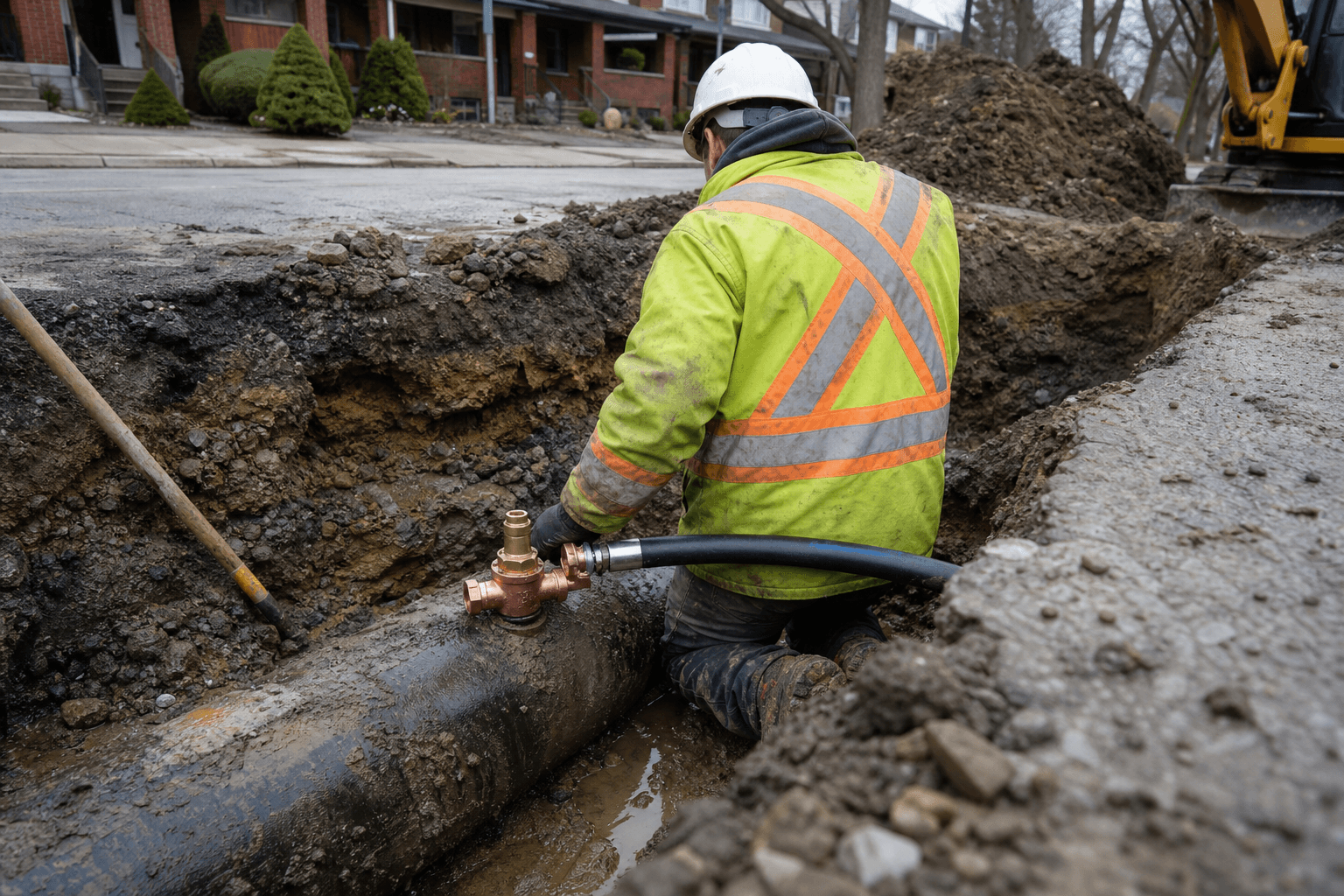
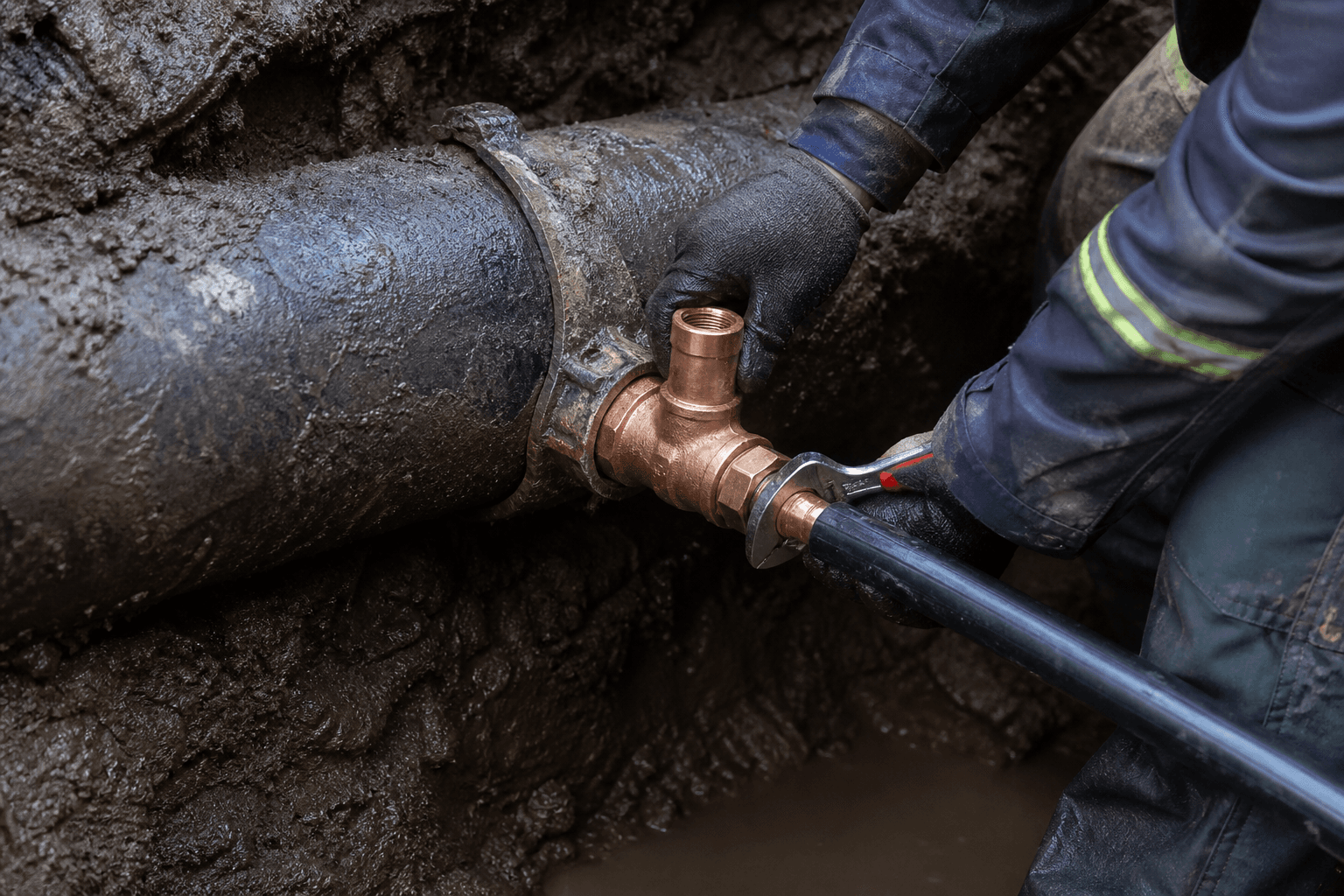
New builds, secondary suites, laneway houses, and major additions all need a new water service connection to the municipal main. This involves a wet tap — cutting into the live water main under pressure — installing a corporation cock, running a service line to the property, and setting a curb stop at the property line. Toronto Water Line Replacement handles the complete scope.
We handle all coordination with the City of Toronto's right-of-way office, including the street-cut permit, traffic accommodation plan if needed, and the final asphalt restoration. Most new service installations are completed in one or two days.
The connection point and service line size are designed based on the building's fixture unit load. We right-size the service from the start so you're not facing a costly upgrade when you add a bathroom or increase your domestic demand.
What's Included
Wet tap and corporation cock installation on the live main
Curb stop installation at the property line
Right-of-way permits and traffic accommodation
Service sized to the building's actual demand — no undersizing
All inspections with Toronto Water included
Whether you're building a new home or connecting a secondary unit, call us early in the process. Getting the service connection right from the start avoids expensive corrections later.
Water Service Line Installation — Common Questions
How do I know if my water line needs to be replaced?
Warning signs include low water pressure throughout your home, discoloured or rusty tap water, unexplained spikes in your water bill, wet patches or sinkholes in your yard, and frequent leaks. If your home was built before 1960, there's a good chance the service line is lead or aging galvanized steel — both worth inspecting.
What is trenchless water line replacement?
Trenchless replacement uses pipe bursting or pipe lining to install a new water line with minimal excavation. A small access pit is dug at each end, and the old pipe is either broken apart from the inside while a new one is pulled through (pipe bursting), or a new liner is cured in place inside the old pipe. Most homeowners see their lawn and landscaping largely undisturbed.
How long does a water line replacement take?
Most residential water line replacements are completed in a single day. Trenchless jobs often finish faster. Larger or more complex installations — long runs, difficult access, or rocky soil — may take two days. We'll give you a clear timeline before any work begins.
Will I be without water during the replacement?
Yes, there will be a temporary water shut-off while the line is being replaced or repaired. We schedule work efficiently to minimize downtime — most customers are without water for only a few hours. We communicate the shutdown window clearly in advance so you can plan accordingly.
What pipe material do you use for replacements?
We use high-density polyethylene (HDPE) or PEX (cross-linked polyethylene) for new service lines — both are approved by Toronto Water, resistant to corrosion, flexible enough for trenchless installation, and rated for 50+ year lifespans. The choice between them depends on your specific situation.
Do I need a permit for water line replacement in Toronto?
Yes. Toronto requires a permit for water service line replacement work. We handle all permit applications, inspections, and coordination with Toronto Water on your behalf — you don't need to do anything extra.
What causes a water line to fail?
The most common causes are age (lead, galvanized steel, and early copper all have finite lifespans), corrosion from soil chemistry, root intrusion from large trees, ground movement and frost heave in Toronto winters, and physical damage from excavation nearby. Pre-1960 homes are highest risk.
Is a lead service line dangerous?
Yes. Lead can leach into drinking water, particularly during periods of low flow like overnight. Health Canada and Toronto Public Health recommend replacing lead service lines as soon as possible. The risk is highest for children, pregnant women, and infants. We treat lead line replacement as an urgent health issue.
Can you replace just a section of the water line?
Yes, if the damage is isolated — a single leak, a joint failure, or a short corroded section — we can do a targeted repair rather than a full replacement. We'll assess the overall condition of the line and recommend the most cost-effective approach.
What is a backflow preventer and why do I need one?
A backflow preventer stops contaminated water from flowing backwards into the municipal supply. Toronto Municipal Code requires one to be installed whenever a service line is replaced. We include backflow preventer installation as part of every water line replacement job.
How do I know if I have a lead water line?
The easiest way is to check the pipe where it enters your home (usually in the basement near the water meter). Lead pipe looks dull grey and is soft — you can scratch it with a coin or key and see a shiny silver surface underneath. Copper looks orange-brown. If you're unsure, we can inspect it for you.
What does a water service upgrade involve?
A service upgrade increases the diameter of your water supply line — most commonly from 3/4" to 1" — to improve flow rate and pressure. This is common when adding bathrooms, finishing a basement, installing irrigation, or connecting an accessory dwelling unit. The process is similar to a full replacement but sized to your new demand.
Do you serve areas outside Toronto proper?
Yes. We serve all of Toronto including North York, Scarborough, Etobicoke, East York, and York, plus the broader GTA: Mississauga, Brampton, Markham, Vaughan, Richmond Hill, Oakville, Pickering, Ajax, and Whitby. Call us to confirm coverage for your specific address.
Ready to Discuss Your Water Service Line Installation Project?
We'll assess the situation, explain your options, and give you a clear quote. No surprises.